
"G1 G2 G3"
500 article(s) found

How about coffee in the Waka area of Yejashafi? What is the proportion of coffee beans in Africa?
Professional coffee knowledge exchange more coffee bean information please follow Coffee Workshop (Wechat official account cafe_style) Woka Cooperative under the YCFCU Cooperative Alliance (Yirgacheffe Coffee Farmers Cooperative Union), established in 2005, is one of 22 junior cooperatives. The Waka Cooperative is located in Jettip, in the district of Gedeo.

Full-bodied, spicy Coffee from Cedar Mochizo Coffee Flavor and Manor characteristics
Local small farmers began growing organic coffee in 2001 and work closely with medium-sized coffee producers because they are familiar with how to grow forest coffee in the highlands. It is one of the micro-producing areas with regional characteristics in the Sidamo producing area. The coffee in this region is quite unique, and the coffee produced is often noticed by the market. Ninety Plus's legendary beans (nekisse)

A brief introduction to the grading treatment of Coffee production areas in Sidamo
Following Cafe Review (Wechat official account vdailycom) found that Cafe Beautiful Cafe opened its own shop [Sidamo sidamo]. The flavor of Coffee in West Dama is very diverse, because different soil composition, regional microclimate and countless native coffee varieties make the coffee produced in each town area have obvious differences and characteristics. Sidamo production area (Sidama)
Yega Sheffield level G1 G2
Yejashaffe is a small town with an elevation of 1700 Murray 2100 meters above sea level. It is also synonymous with Ethiopian boutique beans. The Chinese name Yega cheffe is rich in Ethiopian boutique beans. It makes us settle down in this wetland at an altitude of 1700 Murray 2100 meters. It has been a wetland since ancient times, and the ancient saying [Yega] (Yega) means [settle down], and [snow] (cheffe) means [wetland].
KSJ
In order to distinguish between good quality coffee beans and poor quality coffee beans, manufacturers have to grade coffee. Coffee is usually graded according to the defect rate and the size of beans.
KSJ
In order to distinguish between good quality coffee beans and poor quality coffee beans, manufacturers have to grade coffee. Coffee is usually graded according to the defect rate and the size of beans.

Characteristics of Sidamo Honey Bean Coffee drinking method
Professional baristas follow the Coffee Workshop (official Wechat account cafe_style) Coffee can be grown in Ethiopia in a variety of ways: from wild coffee forests and semi-developed lands, to traditionally operated plots of land to modern plantations. About 50% of the coffee is grown more than 1500 meters above sea level. Ethiopian coffee according to the above four no

Unique Ethiopian Coffee Estate Boutique Coffee Bean Cultivation Location Climate Sea
Ethiopia is home to Arabica coffee, and it is in the forests of the Ethiopian Kaffa region that you can see Arabica coffee growing wild. In Ethiopian, coffee is called Bun or Buna, and coffeebean may be translated from Kaffa Bun. Arabica coffee was discovered early in the Harar area and is likely to come

How do you drink Sidamo honey coffee?
For the exchange of professional baristas, please pay attention to the honeyed words made by the hands of the coffee workshop (Wechat official account cafe_style). 15g powder, medium fineness grinding (small Fuji ghost tooth cutter 3.5grinding), v60 filter cup, 9193 degrees water temperature, 30g water injection for the first time, steaming for 27 seconds, water injection to 105g water cut off, wait for the water volume of powder bed to be reduced to half and then water injection, slow water injection until 225g water, do not use water at the end.

Taste and flavor of Sidamo Honey Coffee
Professional baristas please follow the coffee workshop (Wechat official account cafe_style) Oromia area is one of the sources of coffee in the world, where the aboriginal Oromo, people are the world's first people to use coffee as food, the time can be traced back to the 5th century AD. Oromia is located at about 3-15 degrees north latitude and 33-40 degrees longitude. Because of the origin of its plant species,

Introduction to the flavor characteristics of baking degree of raw beans in Katim, Yunnan Province
Yunnan Katim raw bean baking flavor characteristics grinding scale treatment taste Arabica coffee tree is not easy to grow, many kinds of slopes at high altitude, picking also needs to be carried out manually. But it is better to have a balanced taste and less caffeine. Robasta is relatively easy to plant. It is resistant to heat, cold, moisture, drought and tolerance.
How much do you know about the coffee producing areas in Ethiopia?
Following caf é (Wechat official account vdailycom) found that Beautiful Cafe opened a small shop of its own. What else is there besides Yega Xuefei, the coffee producing area of Ethiopia? Ethiopia, an ancient country on the African continent, is the hometown of Arabica coffee. It is in the forests of the Kaffa region that you can see wild Arabica coffee. Coffee is in Ethiopia.
How to bake Katim? -Growing environment Producing area Flavor Description
1. Baoshan City State-owned Lujiang Farm planted 12.6 mu in March 1991. There was no shade in the area. Irrigation was carried out once in dry season. The management level and fertilizer application level were medium and high. The average yield per mu in 1993/94 was 75 kg, 350 kg in 1994/95 and 225 kg in 1995/96

Yega Fischer, Ethiopia
Yega Xuefei's grading system is not based on the number of eyes, but on the proportion of defective beans in the total number of raw beans. Commonly seen are wash G2 and sun G3 Yega Chuefei, G1 is the highest grade, Yega Xuefei, which has the lowest defect rate and the best quality, can be rated as Grade 1 only after hand selection. A system is scattered in the northern part of the Great Rift Valley of East Africa.
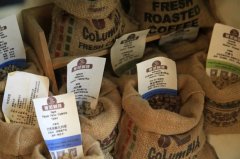
What are the grades of coffee beans? national standard coffee bean rating standard
Explore the coffee classification system! Teach you to read the label on a coffee bag when we go to a coffee shop to buy a cup of coffee or coffee beans, we always see a series of words, which are interspersed with several initials, such as AA, G1, SHG, etc., which actually means that each country classifies coffee according to its characteristics. It is worth noting that in different producing countries, there will be different habits.

Is Sidamo Honey Coffee good? the method of making Sidamo Coffee
Professional baristas follow the Coffee Workshop (official Wechat account cafe_style) Coffee can be grown in Ethiopia in a variety of ways: from wild coffee forests and semi-developed lands, to traditionally operated plots of land to modern plantations. About 50% of the coffee is grown more than 1500 meters above sea level. Ethiopian coffee according to the above four no

Introduction of taste treatment method for baking degree and flavor description of Sidamo coffee beans
Sidamo coffee beans suitable for roasting degree of flavor description taste treatment method Arabica coffee trees are not easy to grow, many on high-altitude slopes, picking also needs to be carried out manually. But it is better to have a balanced taste and less caffeine. Robasta is relatively easy to plant. It is resistant to heat, cold, moisture, drought and tolerance.

Ethiopian Coffee Manor Flavor Description Grindness Taste Characteristics Boutique Coffee Introduction
Ethiopian coffee grade: Ethiopian washed coffee Yirgacheffe G1 G2 Sidamo (Yirgacheffe, Sidamo) the highest grade is second and third grade (G2, G3), the eastern part of Ethiopia sun processing coffee is mostly fourth or fifth grade (G4, G5). In many cases, fourth-grade coffee is labeled as five-grade in order to reduce taxes. The current classification is not very uniform, there are

Introduction to the more famous Yega Xuefei and Sidamo coffee beans
The beans are small, neat and round. Ethiopian sun beans are generally G3--G5, but the beans are G2, equal to the grade of washed beans. Although there are still a few defective beans, they are commendable compared to the sun beans of Harald and Sidamo. The 2015 sun Yega snow caffeine has appeared in the G1 grade, surpassing the G1 washing in terms of quality and sales. This bean is baked

Sidamo honey coffee producing area introduces how to brew Sidamo coffee.
Professional baristas please follow the coffee workshop (Wechat official account cafe_style) Oromia area is one of the sources of coffee in the world, where the aboriginal Oromo, people are the world's first people to use coffee as food, the time can be traced back to the 5th century AD. Oromia is located at about 3-15 degrees north latitude and 33-40 degrees longitude. Because of the origin of its plant species,